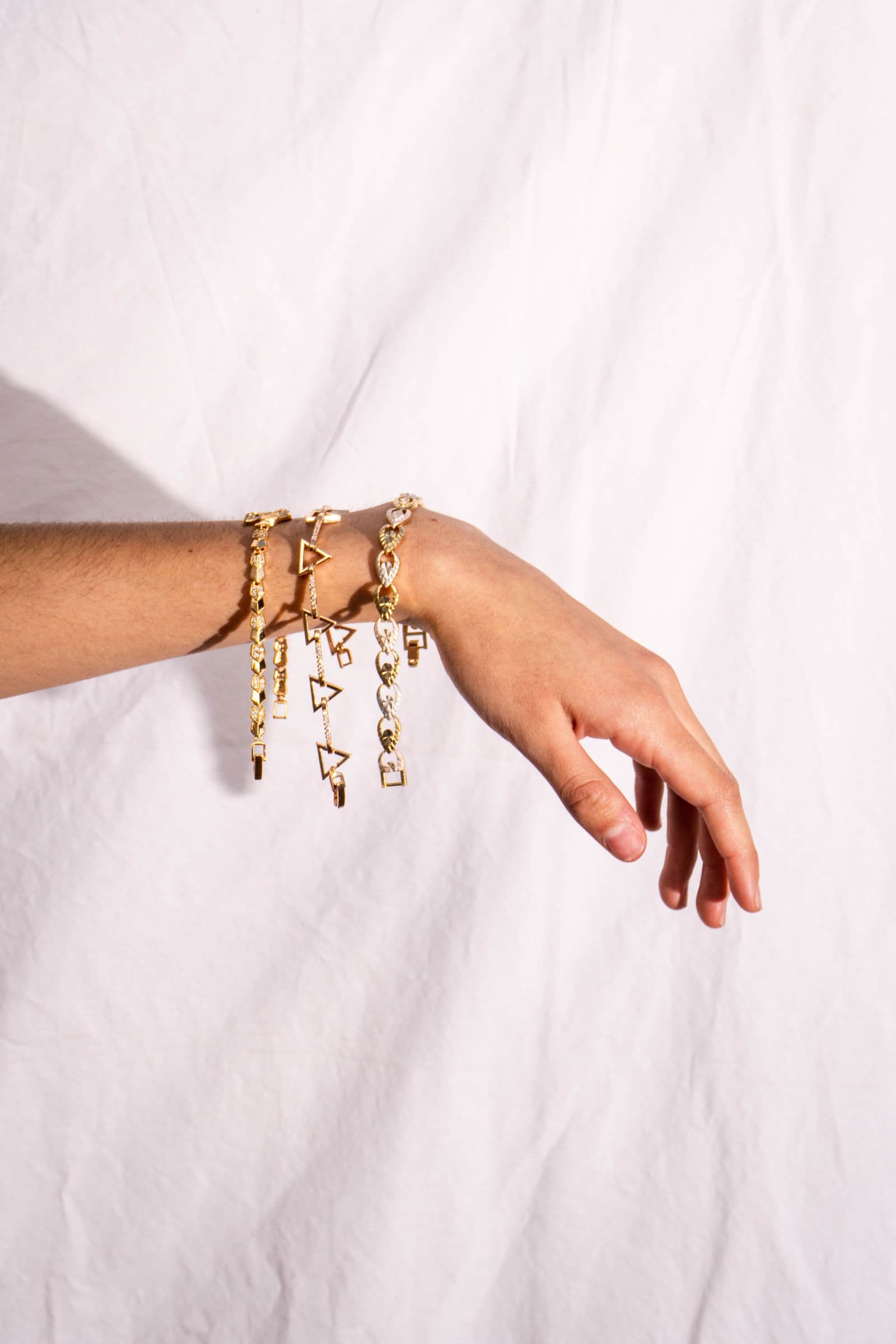
Jewellery for sensitive skin: what actually causes a reaction
Nickel is behind most jewellery allergies — not gold, and not silver. How to identify the culprit and what to wear instead.
If jewellery makes your skin itch, redden or blister, the odds are overwhelming that the cause is nickel. It is one of the most common contact allergens in the world, affecting somewhere around one in ten people, and it turns up in jewellery because it is cheap and hard.
How to tell an allergy from irritation
A true nickel allergy shows as itchy, red, sometimes weeping skin in the exact shape of the contact point, and it develops hours to days after exposure rather than immediately. Simple irritation — from a piece worn too tight, or trapped soap and sweat — appears faster, hurts rather than itches, and clears quickly once the piece comes off. If a reaction keeps recurring with the same piece, treat it as an allergy.
Where the nickel actually is
Rarely on the surface, which is what makes it confusing. Nickel is usually in the base metal underneath the plating. While the plating is intact you may be entirely fine; as it wears at the rub points, the base is exposed and the reaction starts. This is why a piece you wore happily for a year can suddenly turn on you.
What to look for instead
- Stainless steel of surgical grade, which is the most reliably tolerated affordable option.
- Titanium and niobium, which are effectively inert — the usual recommendation for fresh piercings.
- Solid gold at 14k or above; lower karats contain more alloy and more potential nickel.
- Sealed plating over a nickel-safe base, which is what skin-safe demi-fine means when the term is used properly.
Practical steps that help
Keep earrings and rings dry — moisture accelerates the leaching of nickel through worn plating. Take jewellery off before exercise. Replace a piece once you can see base metal at the rub points rather than waiting for a reaction. And if you react to almost everything, get patch tested: knowing whether it is nickel, cobalt or chromium changes what is safe to buy.
Every Trezella piece is made on a skin-safe base and sealed, which is why we describe them as safe for daily wear. If you have a diagnosed metal allergy, though, ask a dermatologist rather than a jeweller — including us.