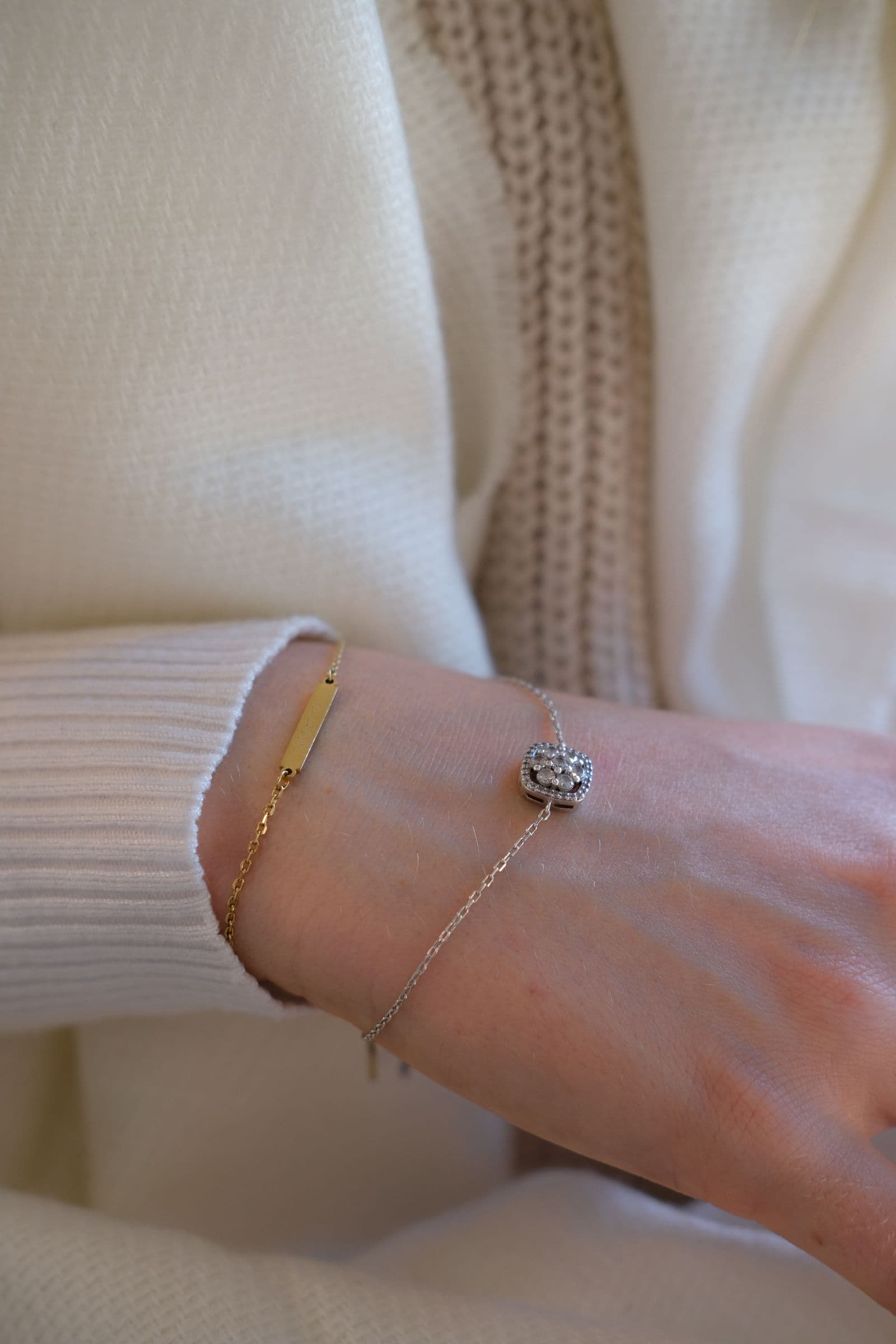
Gold, rose gold or silver tone: how to choose
The skin-tone test that takes thirty seconds, why mixing metals is fine, and the one rule worth keeping.
Most advice about metal and skin tone is stated far too confidently. The honest version: undertone gives you a useful starting point, not a law, and plenty of people look excellent in the metal they have been told to avoid.
The thirty-second test
Look at the veins on the inside of your wrist in daylight. Greenish veins usually mean a warm undertone, and warm skin tends to glow next to yellow gold. Bluish or purple veins suggest a cool undertone, which silver and white metals flatter. If you genuinely cannot tell, you are probably neutral — which means everything works and you can stop reading this section.
What each tone does
- Yellow gold warms the skin and reads traditional and rich. It is the most forgiving against olive and deep skin.
- Rose gold is the most universally flattering of the three, because its copper content flatters warm and cool skin alike. It also photographs beautifully.
- Silver tone is crisp and modern, and it is the strongest choice against very fair or very cool-toned skin.
Mixing metals
Mixing is not a mistake and has not been for years. It only looks accidental when it is scattered — one silver ring lost among gold ones. Anchor it instead: wear a piece that contains both metals, or commit to a clear ratio, two gold to one silver, and repeat that ratio in more than one place. Deliberate reads as styled; random reads as whatever was nearest.
The one rule worth keeping
Match the metal you wear every day — the watch, the wedding band, the piece that never comes off — and build around it. Whatever suits that anchor is the tone you will actually wear, regardless of what your wrist veins say.